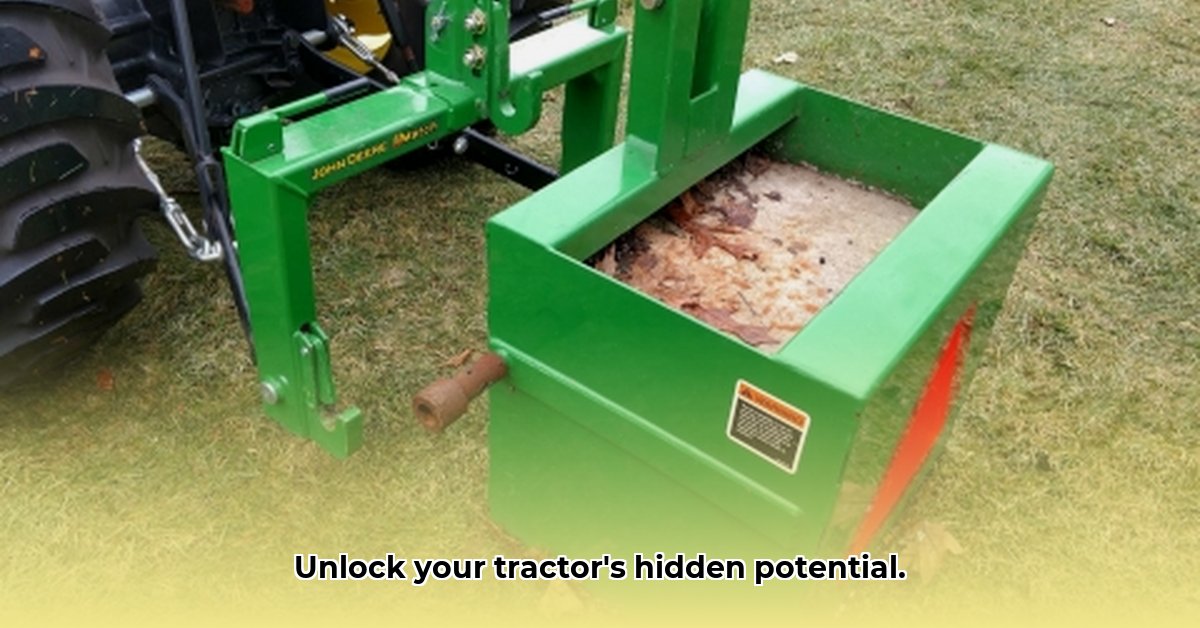
Choosing the right 3-point hitch implements is crucial for sustainable farming. This guide helps you select, use, and maintain implements effectively, boosting efficiency and minimizing environmental impact. For more information on 3-point hitches, check out this helpful resource: 3-point hitch guide.
Selecting the Right Implement: A Sustainable Approach
Sustainable farming demands thoughtful tool selection. Soil type is paramount; a tiller ideal for heavy clay won't perform well in sandy loam. Your crop also dictates the choice; a potato planter is useless for corn. Farm size and budget further influence decisions; larger farms might need more powerful implements, while smaller farms may prioritize maneuverability. Let's examine common choices:
| Implement Type | Sustainable Application | Pros | Cons | Considerations |
|---|---|---|---|---|
| No-Till Drill | Direct seeding into undisturbed soil; erosion control. | Minimizes soil disturbance; boosts biodiversity. | Requires specialized seed; may not suit all soil types. | Seed depth, spacing, soil moisture, and seed type are crucial. |
| Cultivator | Weed control, soil aeration. | Improves soil health; reduces weed pressure. | Potential for soil compaction if misused; may harm shallow roots. | Soil type, crop stage, and tine spacing influence effectiveness. |
| Precision Planter | Precise seed placement; reduces seed waste. | Optimized spacing; improved germination; less seed needed. | Higher initial cost; requires precise calibration. | Seed size, soil type, and planting depth are vital for optimal performance. |
| Variable-Rate Sprayer | Precise chemical application; minimizes waste. | Targets problem areas; reduces chemical use; protects the environment. | Higher initial cost; requires calibration and GPS support. | Crop uniformity, GPS accuracy, and nozzle selection are key. |
| Rotary Tiller (optional) | Soil preparation; mixes organic matter; excellent seedbeds | Efficient soil preparation; mixes organic matter into the soil | Can cause soil compaction; significant fuel consumption. | Soil type is important, as is the intended use (e.g., seedbed prep). |
Optimizing Implement Use for Sustainability
Efficient implement use is pivotal for sustainable farming. Proper adjustment is crucial; incorrect settings lead to poor performance, fuel waste, and potential soil damage. Find the optimal working speed—too fast risks crop damage, too slow wastes time and fuel.
How can I minimize soil compaction? Avoid working wet soil. Use implements designed to reduce compaction. Consider wider implements to reduce passes. No-till farming techniques further limit soil disturbance.
Contour farming and good water management combat erosion. Integrated Pest Management (IPM) strategies, such as leveraging beneficial insects or crop rotation, minimize pesticide use.
Keeping Your Implements in Top Shape: Investing in Longevity
Regular maintenance is critical for extending implement lifespan. Clean implements thoroughly after use to prevent corrosion and wear. Store them properly, shielding them from the elements. Address minor repairs promptly; neglecting small issues can escalate into major, costly problems.
Embracing Technological Advancements: Precision and Efficiency
Technology significantly enhances sustainable farming. GPS guidance systems improve accuracy in fertilizer and pesticide application, ensuring efficient resource use. Variable-rate technology optimizes application based on localized field needs. While there’s an upfront investment, the long-term savings and environmental benefits are substantial.
Key Considerations:
- Soil health: Prioritize soil health by minimizing compaction, erosion, and the need for excessive tillage.
- Resource efficiency: Optimize fuel consumption and reduce chemical use through precise application techniques.
- Long-term investment: View implement maintenance as an investment in long-term farm sustainability and profitability.
This guide provides a foundational understanding. Further research tailored to your specific farm context will enhance your sustainable farming practices. Remember, sustainable agriculture is a continuous process of learning and adaptation.